.jpeg)
.png)
.png)
.png)

The NASA Team
NASA Headquarters & NASA Acres
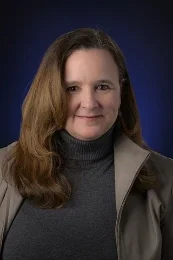
Dr. Karen M. St. Germain
Division Director of the Earth Science Division, National Aeronautics and Space Administration (NASA) Headquarters
Dr. St. Germain is the Division Director of NASA’s Earth Science Division, providing executive leadership and strategic direction for the agency’s Earth Science portfolio, including technology development, research, applied science, and mission operations.
Before joining NASA, she served in senior leadership roles at NOAA, overseeing major satellite programs including JPSS, GOES-R, COSMIC-2, and Space Weather Follow-On, as well as future spaceborne capabilities. She also served in the Department of Defense, where she led strategic space planning and oversight of missile warning and space-based environmental monitoring programs.
Dr. St. Germain began her career as a researcher at the University of Massachusetts, University of Nebraska, and Naval Research Laboratory, conducting research in polar regions, hurricanes, tropical storms, and satellite remote sensing. She holds a B.S. in Electrical Engineering from Union College, a Ph.D. in Electrical Engineering from the University of Massachusetts, and an M.S. in National Security Strategy from the National War College.
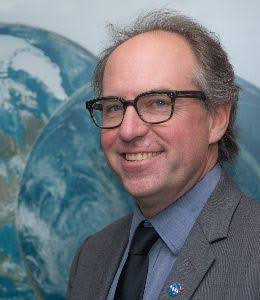
Dr. Tom Neumann
Deputy Director, Earth Sciences Division, NASA Goddard Space Flight Center
Tom Neumann became the Deputy Director of the Earth Sciences Division at NASA Goddard in September 2022 where he helps oversee and guide the incredibly diverse portfolio of research, flight, and modeling projects. Tom's scientific work at Goddard has focused on ICESat-2, the next-generation laser altimeter which launched in 2018. Tom now serves as the ICESat-2 Project Scientist, after serving as the Deputy Project Scientist during the development and implementation stages of ICESat-2 from 2008 to 2018. He also served as the Cryospheric Sciences Lab Chief from Jan 2020 through October 2021. His research included both theoretical and experimental studies of the chemical, physical, and thermodynamic properties of polar snow and ice. He has been involved extensively in field work on the Greenland and Antarctic ice sheets, leading four expeditions and participating in five others between the two poles. Past work has involved studies of snow chemistry on the East Antarctic plateau and calibrating ICESat altimetry data using ground-based GPS surveys in Antarctica.
Tom joined NASA Goddard Space Flight Center in October 2008. Prior to that, he was an assistant professor in the Geology Department at the University of Vermont. He remains an Affiliate Assistant Professor in Earth and Space Sciences at the University of Washington. He earned a B.A. in geophysical science from the University of Chicago, and a Ph.D. in geophysics from the University of Washington.

Emily Sylak-Glassman, PhD
Deputy Associate Director for Earth Action, Earth Science Division
Dr. Emily Sylak-Glassman is Deputy Associate Director for Earth Action in NASA’s Earth Science Division, where she manages activities using NASA Earth science to develop practical solutions for people and the planet. She leads NASA Earth Action’s work on artificial intelligence, including strategy for using large Earth foundation models in decision-making, and works to expand partnerships with private-sector organizations and interdisciplinary science teams.
Previously, she served as a senior policy analyst in NASA’s Office of Technology, Policy, and Strategy, where her data-driven work earned her an Exceptional Achievement medal. Before joining NASA in 2019, she worked at the Science and Technology Policy Institute, advising the White House Office of Science and Technology Policy and civil, defense, and intelligence agencies.
Dr. Sylak-Glassman holds B.S. degrees in Chemistry and Biological Chemistry from the University of Chicago and a Ph.D. in Chemistry from UC Berkeley. Her research focused on photosynthesis and how plants adapt to changing light conditions.

Cordelia Hiers Brady
NASA Earth Action Agriculture Program Coordinator
As Agriculture Program Coordinator at NASA, Cordelia supports Earth Action's Ag Program in managing and developing innovative and sustainable projects that address food and agriculture challenges, with a decade of experience working with funders, researchers, and farmers through public-private partnerships. She leverages communication, project leadership, and relationship-building skills to generate engaging content, build unique partnerships, and oversee daily management of the agriculture team's programs and events. She holds a master's degree in agricultural business and economics from Murray State University.
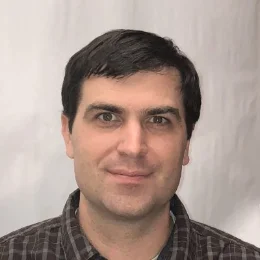
Alex Ruane, PhD
Co-Director, NASA GISS Impacts Group · AgMIP Science Coordinator
Dr. Alex Ruane is a Research Physical Scientist at NASA’s Goddard Institute for Space Studies and Co-Director of the GISS Climate Impacts Group. He also serves as Research Coordinator and Climate Team Leader for the Agricultural Model Intercomparison and Improvement Project (AgMIP), connecting climate, crop, and economic modeling to understand climate impacts on agriculture, food security, and global economies.
Dr. Ruane contributed to the IPCC Sixth Assessment Report as a Coordinating Lead Author and Core Writing Team member. His research examines climate impacts across agriculture, water, infrastructure, energy, urban areas, and human health, with a focus on adaptation strategies and decision-support tools. He also leads work connecting satellite data, climate projections, crop models, and AI to support agricultural and urban decision-making.
He holds a B.S. in Atmospheric Science from Cornell University and a Ph.D. from Scripps Institution of Oceanography at UC San Diego.
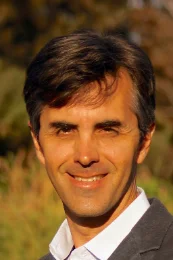
Forrest S. Melton
Senior Research Scientist, NASA Ames Research Center
Forrest Melton is a Senior Research Scientist with the Earth Sciences Division at NASA Ames Research Center. Forrest currently serves as an Associate Program Manager for Water Resources and Agriculture with the NASA Applied Sciences Program, as the NASA Project Scientist for OpenET. Since 2003, he has worked in the Atmospheric and Biospheric Sciences Branches at NASA Ames Research Center on the development of modeling and satellite-driven decision support frameworks including OpenET, the Satellite Irrigation Management Support (SIMS) system, the NASA Earth Exchange (NEX), and the Terrestrial Observation and Prediction System (TOPS). His research focuses on applications of satellite data to improve management of natural resources, remote sensing of evapotranspiration and agricultural water requirements, and ecosystem and carbon cycle modeling. Forrest holds B.S. and M.S. degrees in Earth Systems Science from Stanford University, and has authored over fifty papers and book chapters on applications of remote sensing. He is the recipient of honor awards from NASA for his contributions to TOPS and NEX, and has also been recognized for his work on applications of satellite data for water management with awards from the California Department of Water Resources and the Federal Labs Consortium. In 2022, Forrest was awarded the NASA Exceptional Public Service Medal for his efforts to advance the use of remotely sensed ET data in water resources management.
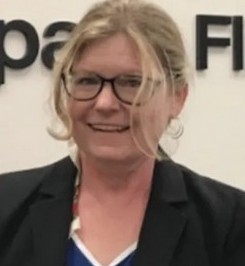
Aries Keck
Communications Strategist, NASA
Aries Keck has over 15 years in NASA communications with a focus on strategic planning, identifying key audiences, and encouraging users of Earth science data. As the first-ever lead for social media at NASA's Goddard Space Flight Center, she established NASA's Sun, Earth, and Moon accounts. Before NASA, Keck was a regular contributor to National Public Radio and co-authored a book on Albert Einstein. She's a member of the National Association of Science Writers and the past president of the DC Science Writers.

Lena Pransky
User Engagement & Outreach Strategist, NASA
Lena Pransky is a science communicator and user engagement strategist at NASA, where she works with the SERVIR program to connect satellite Earth data with locally led solutions to environmental and development challenges around the world. Drawing on her background in agricultural extension, international agricultural development, and science communication, Lena collaborates with scientists and decision-makers to make research more accessible, relevant, and actionable.
She holds an M.S. in International Agricultural Development from the University of California, Davis. Her work spans food security, agroecology, organic farming, food justice, and community engagement, with experience supporting farmers and food-access organizations in both the U.S. and Latin America. She also holds a B.A. in Latin American Studies from Macalester College, with minors in Economics, Political Science, and Portuguese.
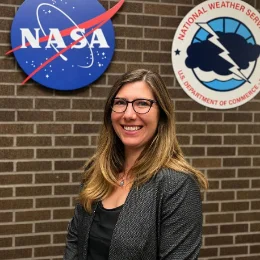
Kait Lemon
Agriculture Trainer, NASA Applied Remote Sensing Training Program (ARSET)
Kait Lemon is a natural resources professional, geospatial analyst, and seventh-generation farmer, with more than a decade of experience working in applied sciences, spanning forestry ecology, agriculture, and conservation program management. She currently serves as the Agriculture Trainer for the NASA Applied Remote Sensing Training Program (ARSET) and as a Partnership Specialist with NASA EarthRISE Developers Academy. In this nexus capacity-building position, she supports the development and expansion of remote sensing applications and training for agricultural applications. Her work focuses on translating NASA Earth observations into actionable tools and decision-support resources for state and local partners across the United States.
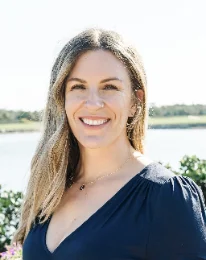
Alyssa K. Whitcraft, PhD
Founding Executive Director, NASA Acres · Research Professor, University of Maryland
Alyssa is a Research Professor in the Department of Geographical Sciences at the University of Maryland, College Park. She is the founding Executive Director of NASA Acres, NASA’s agriculture consortium that focuses on strengthening U.S. agriculture. Her passion for agriculture and her vision for NASA Acres as a program that centers agriculture producers grew out of her experience as a winery kid in California.
Prior to NASA Acres, she founded and continues to direct the Harvest Sustainable and Regenerative Agriculture Initiative, a 501(c)3 consortium of top scientists and innovators in remote sensing, modeling, agronomy, and soil science that aims to build a globally-consistent and site-relevant understanding of sustainable and regenerative agriculture practices and their outcomes. Harvest SARA grew out of NASA Harvest, NASA’s original food security and agriculture consortium that works internationally, for which she was the co-founding Deputy Director for its initial term (2017-2023). She has also served as Programme Scientist for the G20 global agriculture monitoring initiative (GEOGLAM) and as the agriculture lead for the consortium of the world’s space agencies (the Committee on Earth Observation Satellites) for over a decade.
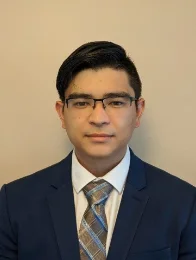
Mike Humber, PhD
Deputy Director, NASA Acres · Associate Research Professor, University of Maryland
Michael Humber is an Associate Research Professor in the Department of Geographical Sciences. He received his B.S. in Geography (2011), M.P.S. in Geographic Information Science (2013), and Ph.D. in Geography (2019) from the University of Maryland. His background is in remote sensing, spatial statistics, and geographic data management. Dr. Humber is the Deputy Director for the NASA Acres consortium, Data Lead for the NASA Harvest consortium, Lead Scientist for the Climate-Smart Agriculture component of the UMD Climate Resilience Network, and member of the UMD-NASA Fire Science Team.
Michael’s current work in agriculture focuses on developing and distributing satellite-based data products that improve the quality and availability of data to agricultural decision-makers and farmers while building inclusive frameworks that involve local stakeholders in the “virtuous cycle” of research design. He leads a team of applications developers that create web/mobile apps and data processing pipelines using high-performance computing (HPC) systems and cloud-native architecture. Such applications provide decision support for humanitarian, research, and operational partners globally (under NASA Harvest) and domestically (under NASA Acres) and in the state of Maryland (under the Climate Resilience Network).

Allison Bredder, PhD
Strategic Engagement Officer, NASA Acres
As Strategic Engagement Officer at NASA Acres, Allison helps build connections between Earth observation science and the agriculture community to co-create tools that use satellite data to support everyday decisions on the farm and strengthen resilience to climate challenges. She is also a Postdoctoral Associate in the Department of Geographical Sciences at the University of Maryland, where her research focuses on the health impacts of wildfire smoke using remote sensing, machine learning, and epidemiological methods. Her broader expertise spans optical remote sensing, data visualization, and science communication.
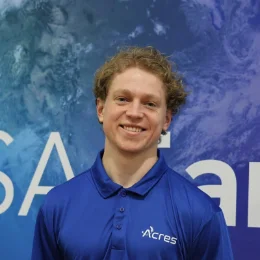
Jacob Orser
Program Support Specialist, NASA Acres
Jacob Orser is a Program Support Specialist at NASA Acres, a consortium focused on U.S. domestic agriculture. He received his education from Macalester College, where he studied geography and economics with an emphasis on food, agriculture, and society. His work includes analysis of remote sensing to quantity crop quality as well as estimations of supply elasticities and farmers' indifference curves. What drives Jacob in this field is his passion for knowledge transfer and education. He is deeply committed to connecting with experts across the agricultural sector and promoting the secure transfer of data. Jacob aims to increase general knowledge about remote sensing and its applications in US agriculture, fostering a long-term view in the field. His work at NASA Acres focuses on bridging the gap between cutting-edge research and practical applications, ultimately benefiting farmers, researchers, and policymakers.
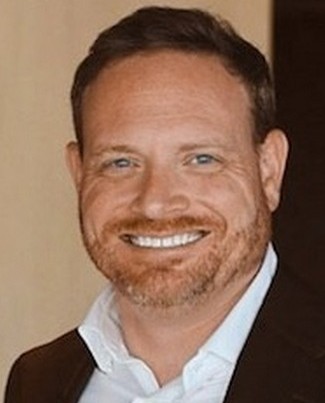
Adam Zwerner
Communications and Outreach Specialist, NASA Acres
Adam Zwerner leads communications and outreach for NASA Acres, NASA’s Agriculture Consortium based at the University of Maryland, where he advances the use of NASA Earth observation data in U.S. agriculture through strategic engagement with internal and external stakeholders.
He brings extensive experience supporting federal agencies, international NGOs, and the private sector across the U.S. and globally.
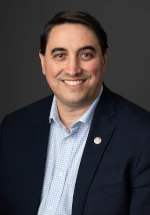
Ignacio Ciampitti
Professor of Agronomy, Purdue University · Co-Director, IDAAS (Oklahoma portion only)
Ignacio Ciampitti, a quantitative agronomist with a focus on the integration of digital agriculture in the context of complex farming systems, is the co-director of the Institute for Digital and Advanced Agricultural Systems (IDAAS) and a full professor in the agronomy department. Prior to this role, he was one of the founding directors of the Institute for Digital Agriculture and Advanced Analytics at Kansas State University. With a strong academic foundation, including a bachelor’s and master’s degree from the University of Buenos Aires and Ph.D. in agronomy from Purdue, Ciampitti’s research explores the integration of crop eco-physiology and plant nutrition with data science, remote sensing and crop modeling tools. Ciampitti has trained many graduate students, research scholars and post-doctoral researchers, and led critical key projects with industry and farmers around the globe. Ciampitti brings a wealth of experience from various past and current leadership roles that position him to successfully lead Purdue’s IDAAS in advancing technology-driven and data-informed agricultural solutions while working closely with founding director Dennis Buckmaster. In addition to his full-time position, Ciampitti is an associate editor-in-chief for European Journal of Agronomy, a technical editor for Crop Science Journal and serves on the editorial board for Field Crops Research, Remote Sensing, Forecasting journals. Outside of research, Ciampitti enjoys spending time with his family and watching soccer, a passion influenced by his South American heritage.

Faith Riensche
NASA Acres FIAT Liaison · Purdue University Research Assistant
A sixth-generation farmer from Iowa, Faith is the liaison for the NASA Acres Farm Innovation Ambassador Team (FIAT) and a research assistant in the Ciampitti Lab at Purdue University. She earned both her B.S. in 2025 and M.S. in 2026 with a focus on food and agriculture from Stanford University.